Хабарлама қалдырыңыз
Егер сіз біздің өнімдерге қызығушылық танытсаңыз және қосымша ақпарат алғыңыз келсе, онда хабарлама қалдырыңыз, біз сізге мүмкіндігінше тез жауап береміз.

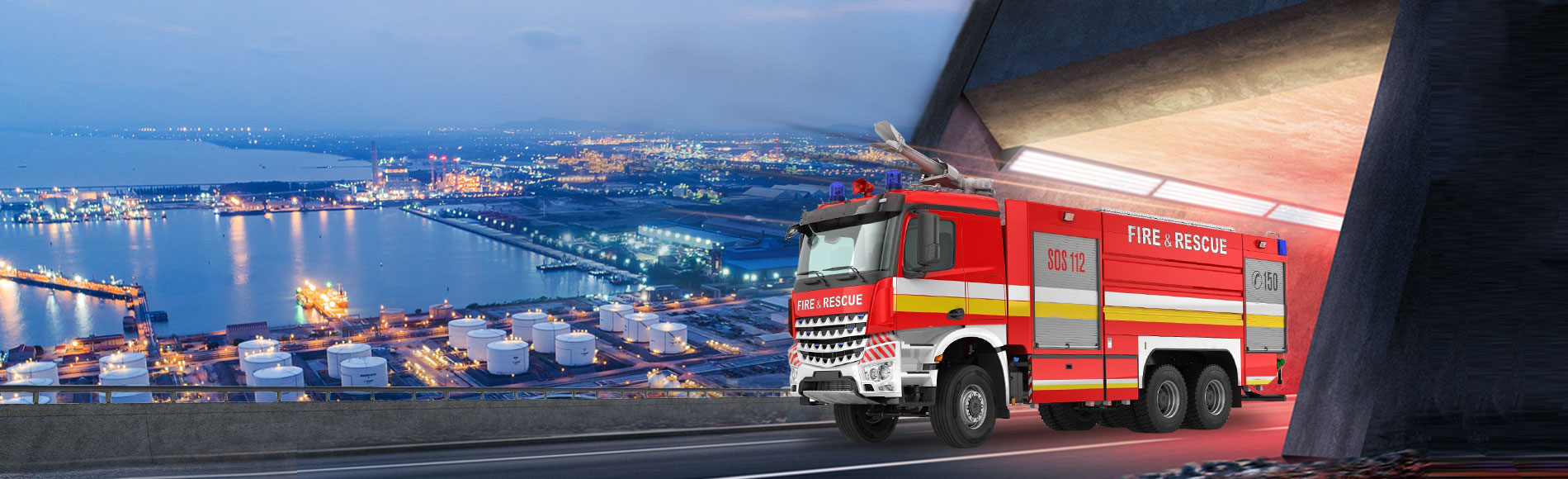
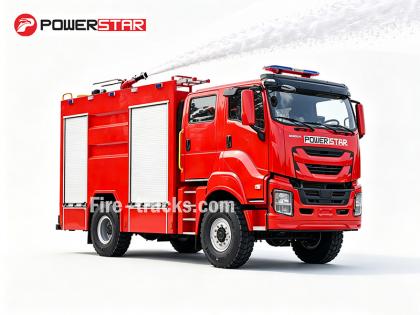
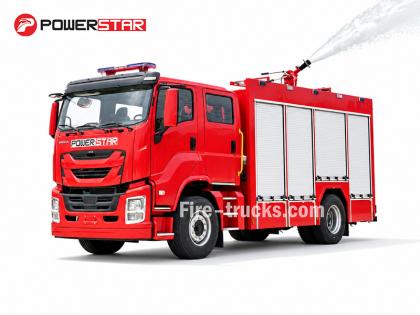
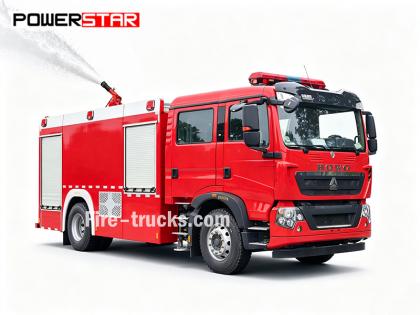
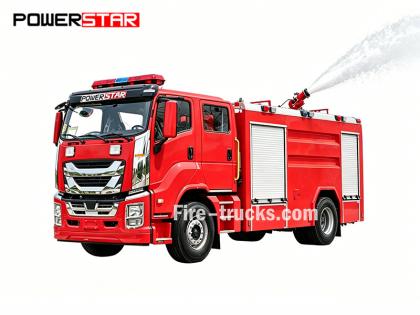
A foam fire truck is a specialized firefighting vehicle designed to transport, mix, and discharge water and foam extinguishing agents for efficient fire suppression. Unlike standard fire trucks that rely primarily on water, foam fire trucks are equipped with a dedicated foam system that mixes water and foam concentrate at a preset ratio to form foam solution.
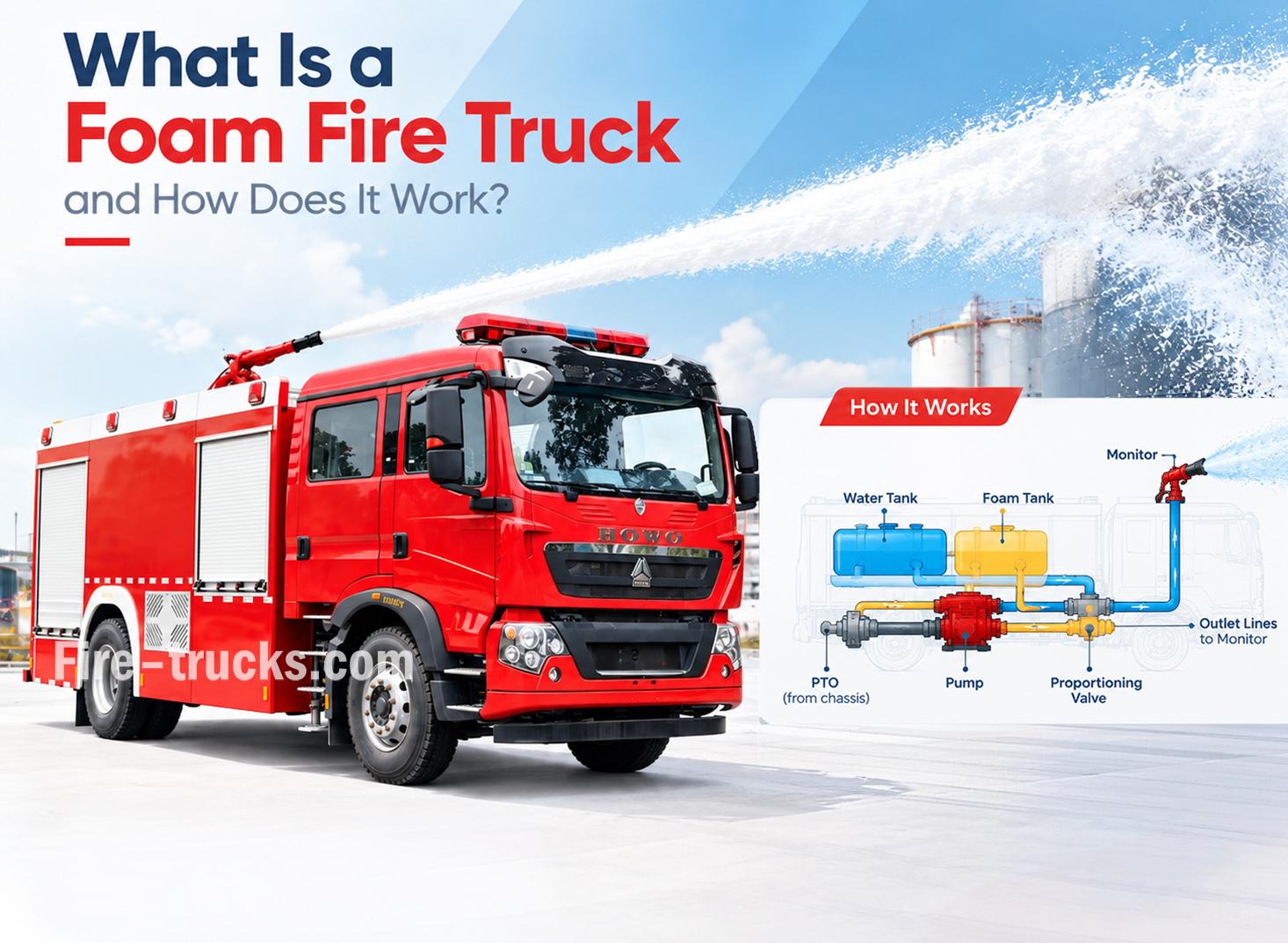
A foam fire truck can discharge water and foam solution simultaneously or independently, making it particularly suitable for extinguishing oil fires (Class B fires). This article provides a systematic explanation of the foam fire truck from the perspectives of engineering structure, power transmission, proportioning principle, operational procedures, and daily maintenance.
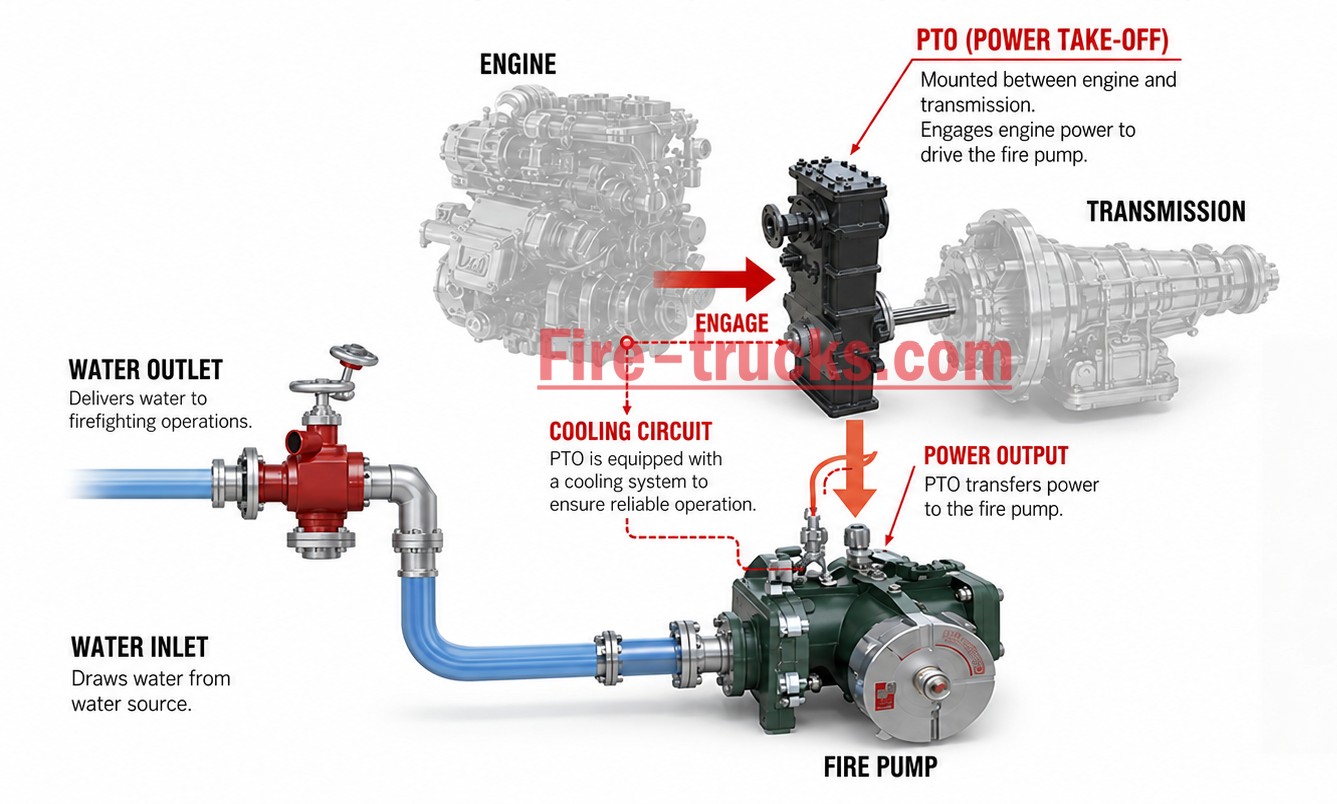
A foam fire truck consists of a chassis and an upper superstructure. Its working principle is: the chassis engine outputs power through the power take-off (PTO), which drives the fire pump via a drive shaft. The fire pump pressurizes water, and the foam proportioning system draws foam concentrate at a preset ratio (typically 3% or 6%) to form foam solution, which is finally discharged through the fire monitor or foam nozzle for firefighting.
A foam fire truck generally consists of two main parts: the chassis and the firefighting superstructure. The upper superstructure mainly includes the following core components:
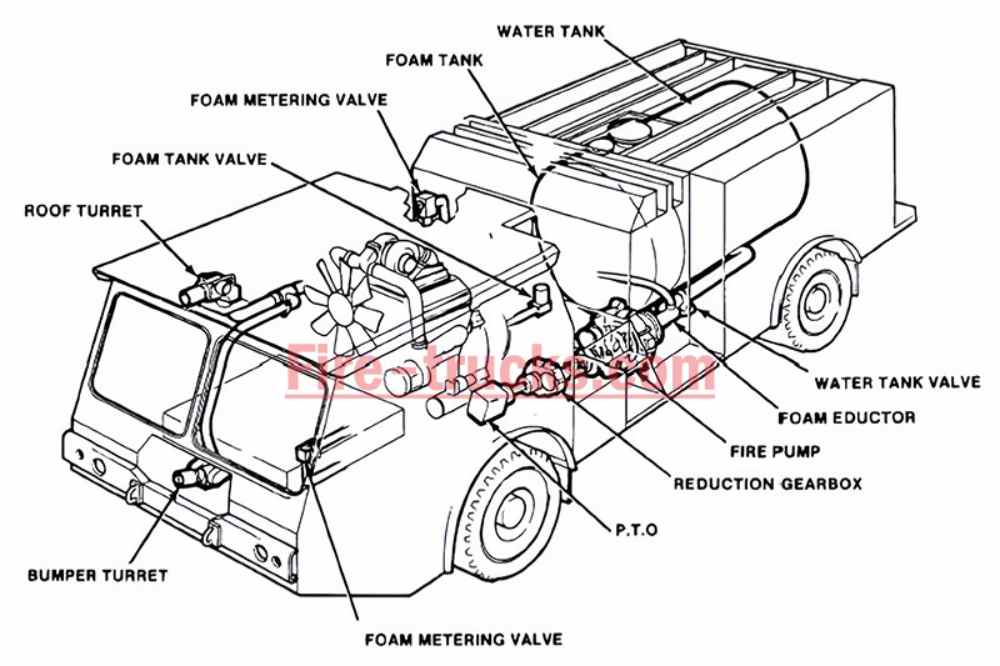
Power Take-Off (PTO): Transfers engine power from the chassis drivetrain to the fire pump
Water Tank: Stores plain water for straight stream discharge and foam solution preparation
Foam Tank: Stores foam concentrate
Equipment Compartment: Stores hoses, nozzles, tools, and couplings
Fire Pump: Draws water, pressurizes it, and delivers water or foam solution
Priming Pump: For drafting water (e.g., piston priming pump)
Foam Proportioning System: Mixes foam concentrate with water at the required ratio
Fire Monitor: Manual or remote-controlled long-range discharge device
The power source of a foam fire truck is the chassis engine. The PTO extracts power from the gearbox or engine flywheel and transmits it to the fire pump through a drive shaft. Medium and heavy foam fire trucks currently mostly use full-power sandwich-type PTOs (front of gearbox) or drive shaft PTOs (rear of gearbox). The PTO output drives the fire pump. The fire pump draws water from the tank or an external source and pressurizes it.
Part of the pressurized water from the fire pump enters the foam proportioning system, while the other part is used directly for firefighting. The foam proportioning system draws foam concentrate from the foam tank and mixes it with water at the preset ratio to form foam solution, which is finally delivered to the fire monitor or foam nozzle for discharge.
The foam proportioner is installed on the fire pump piping. Its main structure includes the discharge pipe, ball valve, filling pipe, regulating valve, Y-shaped pipe, and diffuser tube. Its core principle is to use the venturi effect to create negative pressure and draw foam concentrate into the mixing chamber.
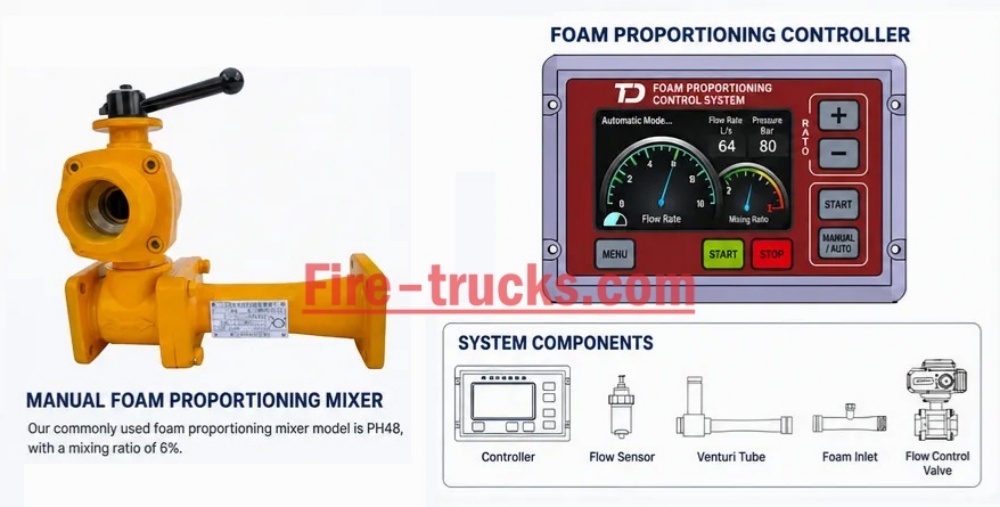
When the pressurized water from the fire pump flows through the narrowed flow passage (venturi tube) inside the proportioner, its velocity increases and its pressure drops, creating negative pressure. The foam concentrate in the foam tank is automatically drawn into the mixing chamber through the inlet pipe, ball valve, and proportioning orifice under atmospheric pressure. In the mixing chamber, the foam concentrate initially mixes with water, then flows through the diffuser tube into the fire pump inlet, where it is mixed and pressurized again before being delivered to the foam-generating device.
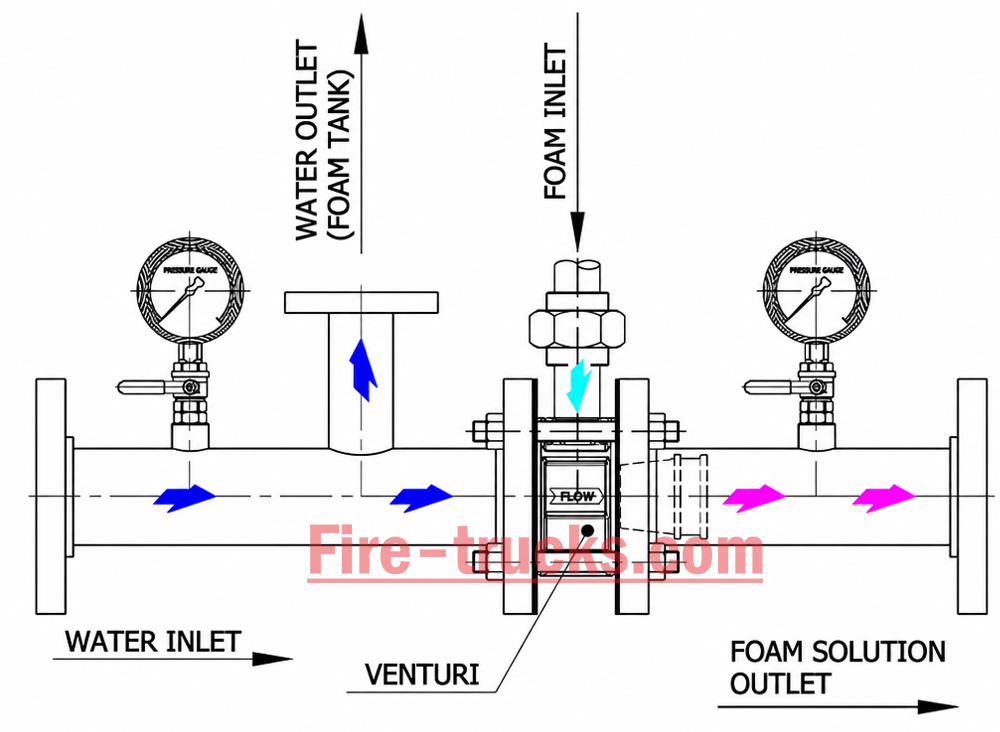
A breather valve is installed on top of the foam tank. When foam concentrate is drawn out and the liquid level drops, the breather valve draws in air to maintain pressure balance inside the tank, ensuring that foam concentrate can be continuously and steadily drawn into the proportioner, thereby maintaining a constant water-to-foam ratio.
There are two foam concentrate supply methods for foam firefighting: foam tank supply and external foam source supply.
Foam concentrate is drawn from the foam tank by the proportioner, delivered through the fire pump to the air foam generator, and formed into foam.
Operating steps:
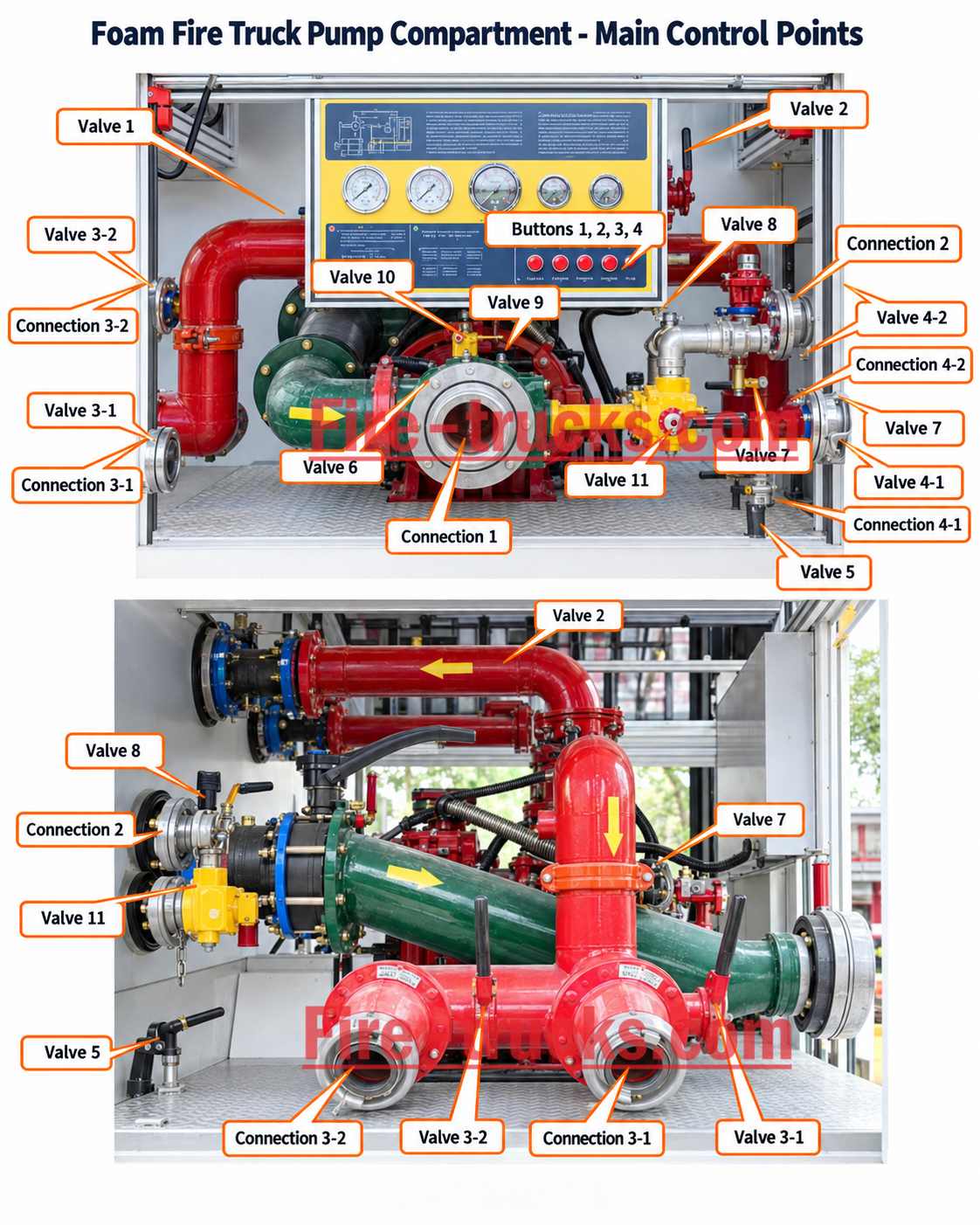
Take up the hose and foam nozzle as required. Connect one end of the hose to the fire pump discharge valve and the other end to the foam nozzle (or other discharge device)
Set the air foam nozzle handle to the foam solution and water position
Start the fire pump to supply water according to the instructions
Open the discharge valve switch
Open the speed control valve and adjust the pump pressure to the standard working pressure of the required equipment
Close the foam concentrate operating handle on the fire pump, open the foam concentrate inlet valve on the suction pipe, and the air-foam solution will discharge from the fire monitor (foam nozzle) or other spray equipment
If the foam concentrate in the foam tank is used up, close the foam inlet valve. Unscrew the external liquid inlet screw, install the dropper tube, and insert the other end into the foam concentrate drum so that foam discharge can continue
When the fire pump is delivering foam solution, if the water in the tank is insufficient, do not apply pressurized water to the fire pump inlet
After firefighting, the proportioner and piping system must be flushed with water. The correct method is to place the nozzle in clean water, start the pump, and open the proportioning valve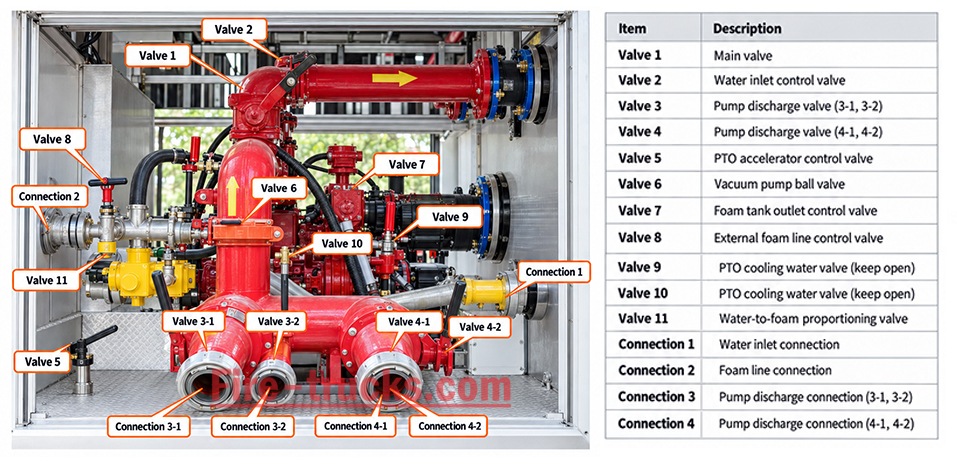
Foam concentrate is drawn from an external foam drum through the air foam nozzle inlet for firefighting.
Operating steps:
Take up the hose and foam nozzle as required. Connect one end of the hose to the fire pump discharge valve and the other end to the air foam nozzle (or other discharge device). Set the air foam nozzle handle to the foam solution and water position
Adjust the pump pressure according to the operating instructions of the fire pump. Once the pressure reaches the foam nozzle's marked outlet pressure, foam can be discharged
After firefighting, the air foam nozzle must be cleaned
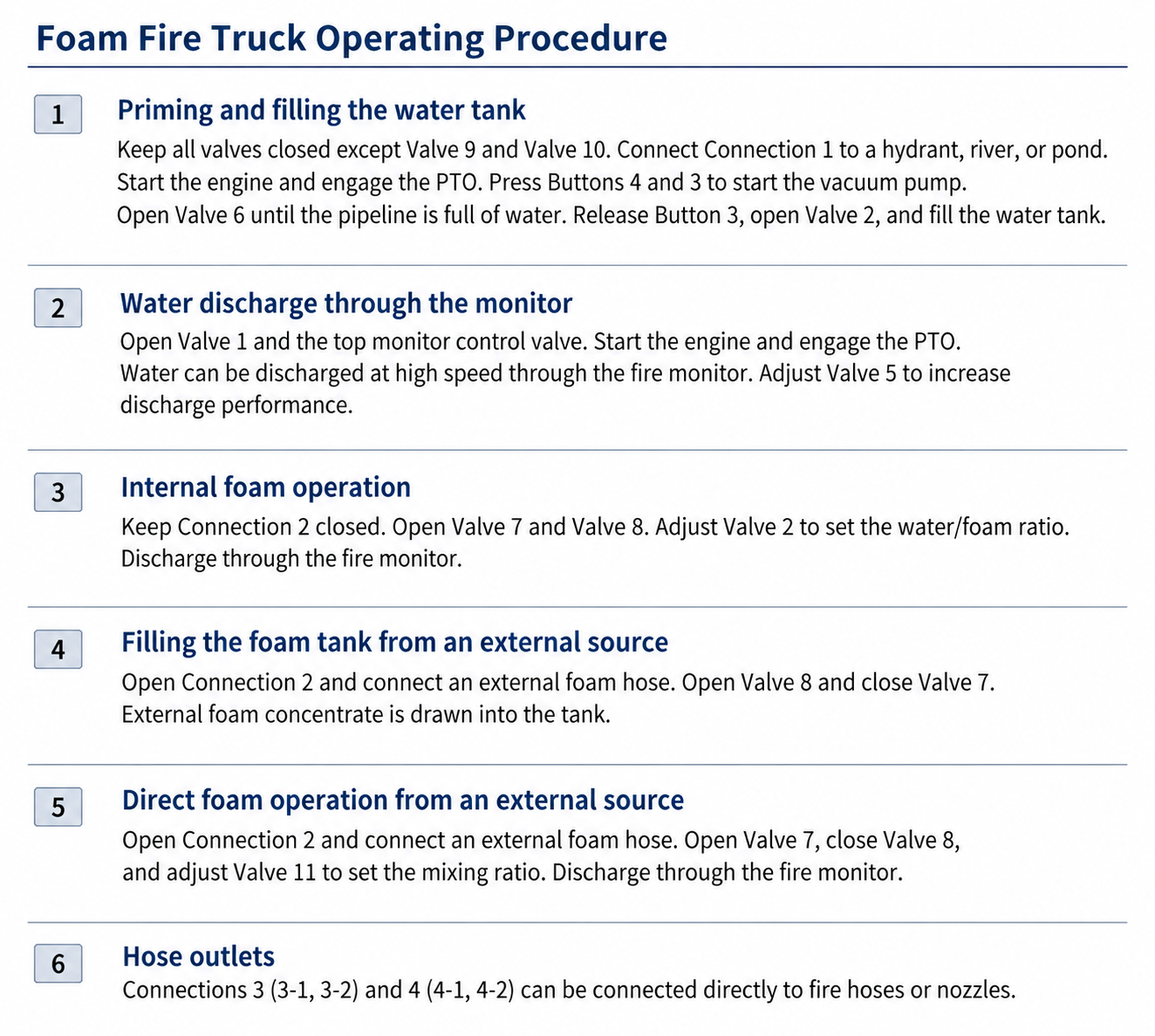
There are two main types of common faults in the foam system: (1) the foam nozzle discharges only water, no foam, or interrupts foam discharge; (2) the discharged foam quality is abnormal.
| Possible Cause | Troubleshooting Method |
|---|---|
| Foam proportioner not opened | Open the proportioner |
| Water source pressure greater than 0.049 MPa; proportioner cannot draw foam concentrate | Use a water source with pressure less than 0.049 MPa |
| Vent hole on foam tank blocked | Clear the blockage |
| Inflation nozzle on foam tank not opened | Open the inflation nozzle |
| Valves in the foam suction piping system not opened or blocked | Open valves and clear blockages |
| Suction pipe not tightened, or rubber gasket damaged or missing | Tighten or replace with a new gasket |
| Possible Cause | Troubleshooting Method |
|---|---|
| Proportioner suction rate does not match the nozzle or monitor calibration value | Rotate the proportioner valve core to the specified value |
| Air suction holes on the nozzle or monitor blocked | Clear the blockage |
| Foam screen damaged | Adjust the foam screen |
| Foam concentrate deteriorated | Replace with good-quality foam concentrate |
Suction Limitation: When using the foam proportioner, the fire pump cannot draw pressurized water from the hose coupling.
PTO Operation: When engaging or disengaging the PTO, ensure the clutch is fully depressed and engine speed is low.
Dry-Running Limit: Dry running of the fire pump for more than 3 minutes or at high speed is not permitted.
Overpressure Protection: During system operation, pump speed must be reduced before all discharge valves are closed. Long-term operation of the fire pump under overpressure conditions is prohibited.
Pre-fill Reset: After water pre-fill is complete, reset the pre-fill handle.
Hot Weather Attention: In hot weather, the water cooling valve must be opened after the PTO has been running for more than 10 minutes. Drain residual water after operation.
Special Media and Cold Weather: If seawater, sewage, or corrosive liquids are used, run the fire pump with clean water first to clean it. In cold weather, run the piston pump for a period to drain residual water and prevent freezing.
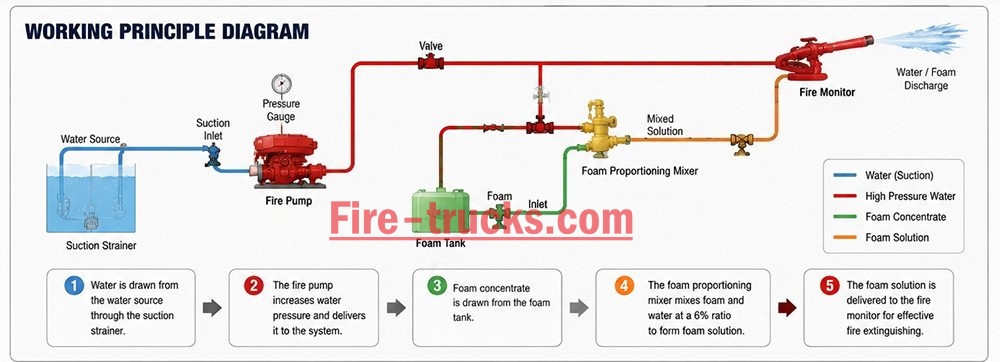
To ensure the vehicle remains in good condition over the long term, drivers and operators must inspect the vehicle daily to identify and eliminate potential hazards in a timely manner. Specific inspection items include:
Chassis Components: Refer to the chassis manual
Operation and Lubrication: Check the sound and lubrication of the fire pump, PTO, priming pump, and drive shaft daily
Air Tightness: Check the air tightness of all connections daily
Oil and Leaks: Check whether the PTO, reciprocating primer pump, and gearbox oil have deteriorated or are missing, and whether any components are leaking
Cooling and Water Level: Check whether the pump frame box cooling pipe is blocked, whether the priming water tank level is normal, and whether there are leaks
Fire Monitor: Check whether rotation is flexible, and whether lubrication has deteriorated, is missing, or is leaking
Overall Cleanliness: Organize all equipment and accessories, keeping them clean, dry, and in good condition
Q1: Can a foam fire truck fight fires using only water?
A: Yes. The water tank and foam tank are independent. When foam is not needed, the proportioning system can be left off and water can be used directly from the water tank.
Q2: Why is the foam tank much smaller than the water tank?
A: Foam concentrate is added to the water stream at a low ratio (typically 3% or 6%), not mixed 1:1. For example, at a 3% ratio, every 1,000 L of foam solution requires only 30 L of foam concentrate. Therefore, the foam tank does not need to match the water tank's capacity.
Q3: What is the function of the breather valve on top of the foam tank?
A: When foam concentrate is drawn out and the liquid level drops, the breather valve draws in air to balance the pressure inside the tank, ensuring that foam concentrate is continuously and steadily drawn into the proportioner and maintaining a constant mixing ratio.
Q4: Why can't the fire pump run dry for extended periods?
A: The fire pump relies on water for lubrication and cooling. Dry running causes mechanical seal dry-burn wear and, in severe cases, pump body damage. Standards require that dry running must not exceed 3 minutes.
Q5: What is the difference between internal, external, and self-priming foam drawing?
A: Internal drawing draws foam concentrate from the onboard foam tank; external drawing draws from an external foam drum through an external suction hose; self-priming draws directly from the foam drum through the foam nozzle suction hose. All three methods require flushing the system with clean water after use.
Q6: Why does the foam nozzle discharge only water and no foam?
A: Common causes include the proportioner not being opened, water source pressure exceeding 0.049 MPa, a blocked vent hole on the foam tank, a closed inflation nozzle, closed or blocked valves in the foam suction piping, or a loose suction pipe connection. Check each item in sequence.
Q7: What causes abnormal foam quality?
A: Common causes include a mismatch between the proportioner suction rate and the nozzle calibration value, blocked air suction holes on the nozzle or monitor, a damaged foam screen, or deteriorated foam concentrate. Check the proportioner setting, clean the air suction holes, adjust the foam screen, and replace the foam concentrate if necessary.


Сізді келесі ақпарат қызықтыруы мүмкін
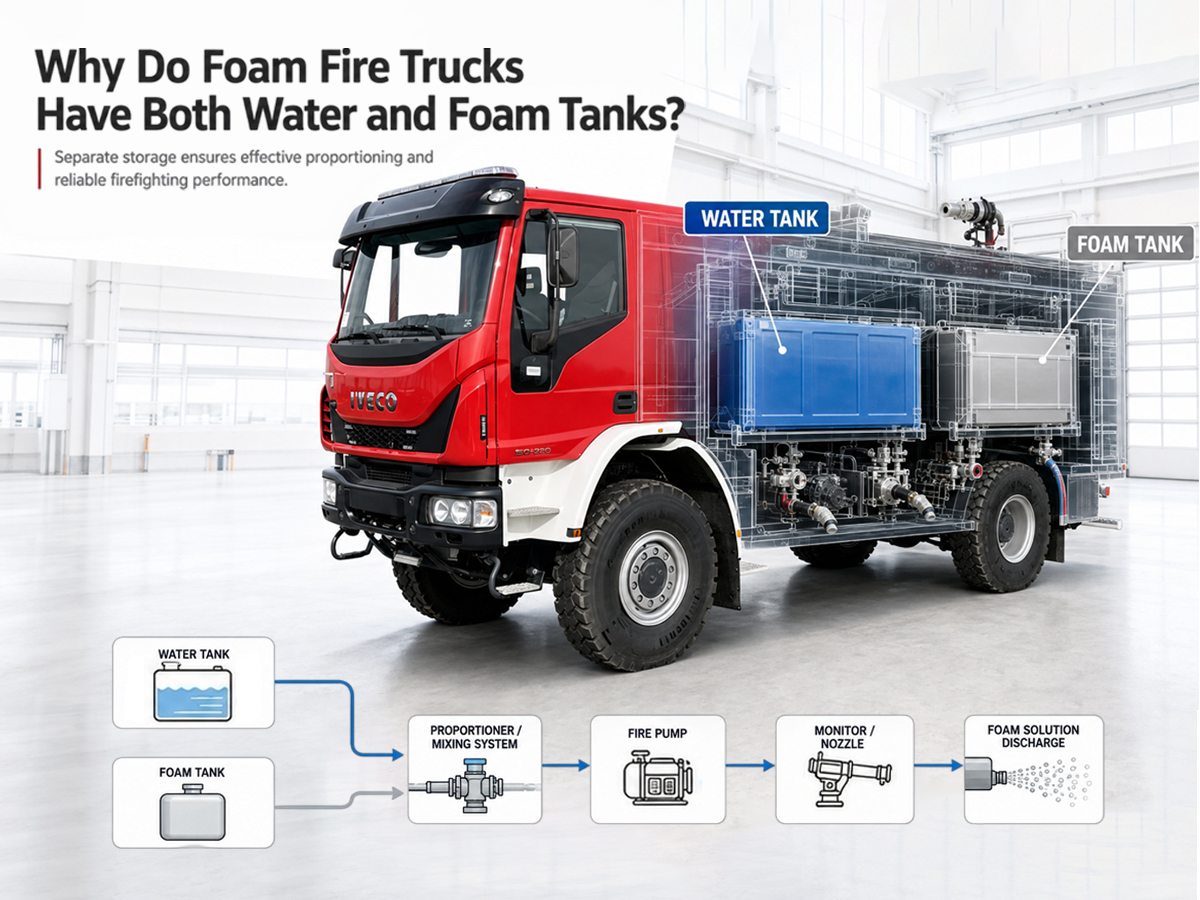
Көбікті өрт сөндіру көліктері арнайы көбік концентраты багын бөлек су багымен және дәл пропорциялау жүйесімен біріктіреді. Олар көбік концентраты мен өрт сөндіру қолданылуына байланысты әдетте 1%, 3% немесе 6% концентрацияда су ағынына көбік концентратын енгізу үшін пропорциялау жүйесін пайдаланады.қос бакБұл дизайн өрт сөндірушілерге көбік қажет болмаған кезде тек суды пайдалануға және тек қажет болған жағдайда көбік концентратын енгізуге мүмкіндік береді. Бұл жұмыс икемділігін жақсартады, көбік шығынын бақылауға көмектеседі және өрт сөндіру жүйесін әртүрлі өрт қауіптеріне бейімдеуге мүмкіндік береді. Көбік өрт сөндіру көліктерінің негізгі жұмыс принципі мен негізгі технологиясы, әсіресе олардың су және көбік бактарының болуы көптеген тұтынушылардың назарында. Бүгін бұл туралы білейік. Жылдам жауап: Көбікті өрт сөндіру көліктері әдетте бөлек су және көбік концентратын бактарды пайдаланады, себебі су мен көбік концентраты әртүрлі пропорцияларда қажет және ұзақ уақыт бойы алдын ала араластырылған ерітінді ретінде сақтаудың орнына жұмыс кезінде біріктіруге арналған. Су багы негізгі сумен жабдықтауды қамтамасыз етеді, ал көбік багы концентрленген көбік агентін сақтайды. Пропорциялау жүйесі су ағынына қанша концентрат енгізілетінін бақылайды, бұл көлікке тек сумен және көбікпен өрт сөндіру режимдері арасында ауысуға мүмкіндік береді. Мен. Көбіктен жасалған өрт сөндіру көлігінің негізгі компоненттері қандай? 1. Су ыдысы Коррозияға төзімді конструкция (коррозияға қарсы жабыны бар көміртекті болат немесе тот баспайтын болат), сыйымдылығы 4000-нан 6000 литрге дейін. Көлік қозғалысы кезінде сұйықтықтың көтерілуін азайтуға арналған бөгеттермен және кедір-бұдыр жерлерде шассидің майысуын сіңіруге арналған икемді бекіткіштермен жабдықталған. 2. Көбік концентраты бар бак Белсенді көбік концентраттарының химиялық шабуылына төзімді тот баспайтын болаттан жасалған конструкция, әдетте 500-2000 литр сыйымдылыққа ие. Көбік концентраты мен жүйенің дизайнына байланысты, сақтау кезінде концентраттың жағдайын сақтауға көмектесетін циркуляция немесе араластыру сияқты мүмкіндіктерді резервуарда қамтуы мүмкін. 3. Көбікті пропорциялау жүйесі Арнайы ерітіндіден көбік концентратын алатын пропорционалды жүйекөбікрезервуарға құйып, оны белгілі бір концентрацияда су ағынына енгізеді. Көбік концентраты мен жүйенің дизайнына байланысты пропорциялау теңдестірілген қысымды, сорғымен басқарылатын немесе вентуриге негізделген технологияны қолдануы мүмкін. 4. Өрт сорғысы Өрт сорғысы - бүкіл көбік жүйесінің қуат көзі. Ол су ыдысынан суды тартып, оны өрт сөндіру жұмыстары үшін қажетті ағын мен қысымға дейін қысыммен қамтамасыз етеді. Сорғы әдетте көліктің қуатты алу жүйесімен (PTO) немесе тәуелсіз қозғалтқышпен басқарылады және әртүрлі ағын жылдамдықтарында көбік концентратын дәл айдауды қамтамасыз ету үшін пропорционалды жүйемен үйлесімді болуы керек. Жалпы конфигурацияларға стандартты операцияларға арналған бір сатылы центрифугалық сорғылар және жоғары қысымды қолданбаларғ...
Мәлімет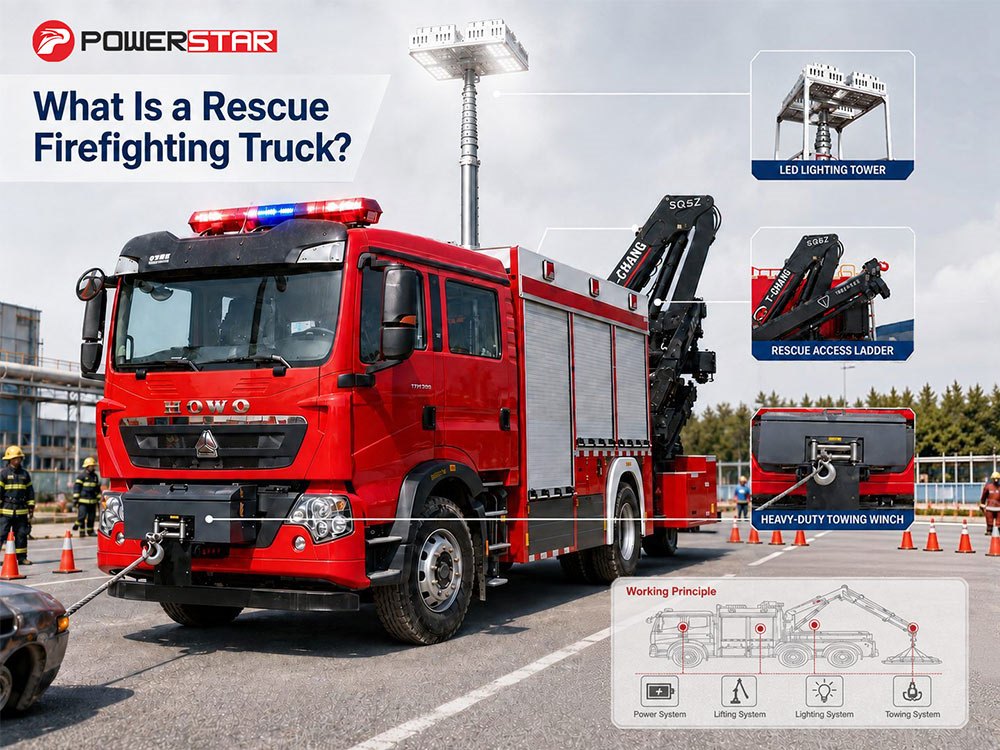
Өрт сөндіру-құтқару көлігі - өртті сөндіру және құтқару жұмыстарын орындауға арналған мамандандырылған апаттық көлік. Негізінен өртті сөндіруге бағытталған стандартты өрт сөндіру көліктерінен айырмашылығы,құтқару өрт сөндіру көліктеріөрт сөндіру жабдықтарын құтқару құралдарымен, көтергіш және көтергіш құрылғылармен, кескіш және жаю құралдарымен, лебедкалармен, генераторлармен және жарықтандыру жүйелерімен біріктіру. Бұл мақалада құтқару өрт сөндіру көлігінің не екені, оның басқа өрт сөндіру техникаларынан қалай ерекшеленетіні, қандай жабдықтармен жабдықталғаны және қашан қолданылатыны түсіндіріледі. I. Өрт сөндіру көлігі дегеніміз не? Құтқару өрт сөндіру көлігі – өрт сөндіру мүмкіндіктерін мамандандырылған құтқару жабдықтарымен біріктіретін көп мақсатты апаттық көлік. Ол негізінен адамдар, көліктер, ғимараттар немесе өнеркәсіптік нысандар қатысатын оқиғалар болған кезде кешенді төтенше жағдайларға жауап беру мүмкіндігін қамтамасыз ету үшін қолданылады. Көлік құралының конфигурациясына байланысты, құтқару өрт сөндіру көліктері әртүрлі құтқару құралдарымен және өрт сөндіру жүйелерімен жабдықталуы мүмкін. Нақты жабдықты таңдау көлік құралының мақсатына байланысты өзгеріп отырады. Мысалы, қалалық құтқару үшін конфигурацияланған көлік өнеркәсіптік құтқару, жер сілкінісі немесе жол-көлік оқиғаларын қалпына келтіруге арналған көліктен өзгеше жабдық орналасуына ие болуы мүмкін. II. Өрт сөндіру көлігі қандай жабдықты тасымалдайды? Құтқару өрт сөндіру көлігінде тасымалданатын жабдық көліктің дизайнына және оның мақсатты қолданылуына байланысты. Дегенмен, көптеген модельдердегі жабдықты бірнеше негізгі санаттарға бөлуге болады: өрт сөндіру жабдықтары, құтқару құралдары, қуат жабдықтары, жарықтандыру жабдықтары, көтеру және тарту құрылғылары және жеке қорғаныс құралдары. 1. Өрт сөндіру жабдықтары Өрт сөндіру жабдықтарына өрт сөндіргіштер, өрт шлангілері, өрт сөндіру форсункалары, портативті сорғылар, су бактары, көбікті өрт сөндіру жүйелері, өрт мониторлары және басқа да басу құралдары кіруі мүмкін. 2. Гидравликалық құтқару құралдары Гидравликалық құтқару құралдары көбінесе жол-көлік оқиғаларынан құтқару жұмыстарында зақымдалған көлік құрылымдарын кесу, жаю немесе көтеру үшін қолданылады. Жалпы жабдықтарға гидравликалық кескіштер, гидравликалық жаю құрылғылары және гидравликалық тартқыштар жатады. 3. Электр генераторы Оқиға орнында сыртқы қуат көзі болмаған кезде генераторлар құтқару құралдарын, жарықтандыру жабдықтарын, байланыс құрылғыларын және басқа да жабдықтарды электр қуатымен қамтамасыз етеді. 4. Жарықтандыру жабдықтары Апаттық жарықтандыру жүйелері құтқару қызметкерлеріне түнде, ғимараттардың ішінде, тас жолдарда және басқа да жарық аз жағдайларда жұмыс істеуге көмектеседі. 5. Лебедкалар және сүйреу жабдықтары Кейбір құтқару өрт сөндіру көліктері зақымдалған көліктерді жылжытуға немесе құтқару операциялары кезінде ауыр заттарды ұстауға арналған лебедкалармен және сүйреу жабдықтарымен жабдықталуы мүмкін. III. Құтқару өрт сөн...
Мәлімет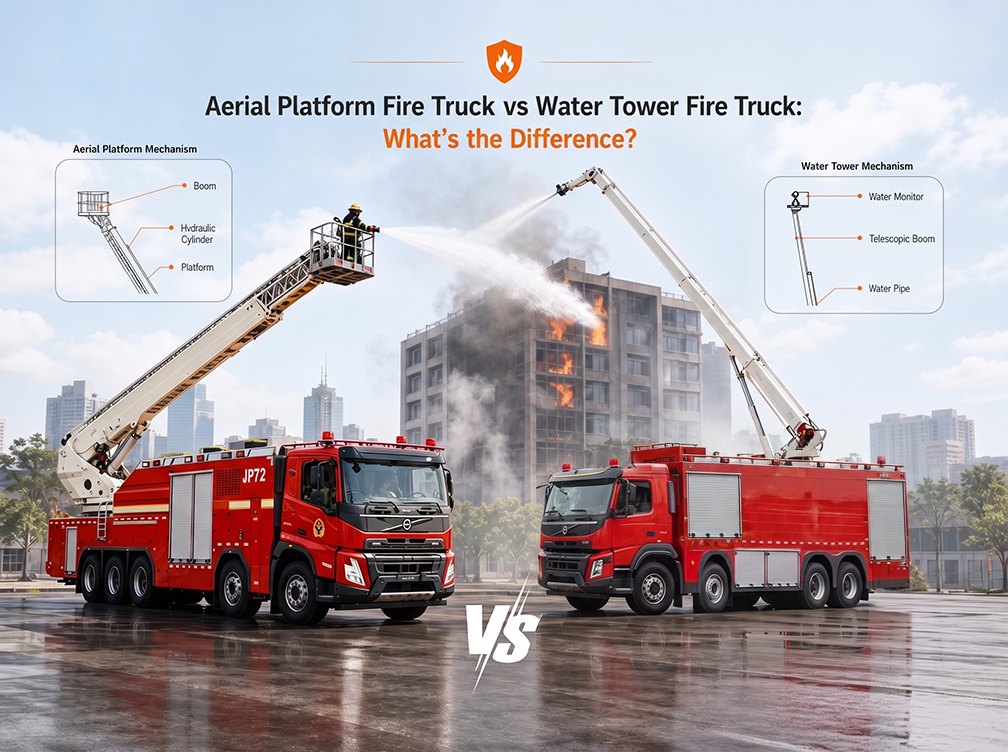
Биік ғимараттардағы, өнеркәсіптік нысандардағы немесе үлкен қоймалардағы өрттермен күресуге келгенде, әуелік өрт сөндіру көліктері таптырмас құрал болып табылады. Бірақ әуелік техниканың әртүрлі түрлерінің ішінде жиі шатастырылатын екі түрі бар: әуелік платформасы бар өрт сөндіру көлігі және су мұнарасы бар өрт сөндіру көлігі. Бір қарағанда, олар ұқсас көрінуі мүмкін — екеуінде де гидравликалық жебелер бар және биіктікте өрт сөндіруге арналған — алайда олардың атқаратын міндеттері түбегейлі өзгеше. Бұл мақала осы екі көлік түрінің негізгі айырмашылықтарын талдап, өрт сөндіру қызметінің мамандарына, сатып алу менеджерлеріне және жабдық дистрибьюторларына пайдалану қажеттіліктеріне сүйене отырып, дұрыс шешім қабылдауға көмектеседі. I. Әуелік платформасы бар көліктер дегеніміз не? Қытайдың GB 7956.12-2015 ұлттық стандартына сәйкес, екі көлік те әуелік өрт сөндіру көліктері санатына жатады — олар биіктіктегі жұмыстарға арналған көтерілетін жебелермен, айналмалы платформалармен және өрт сөндіру жабдықтарымен жабдықталған көліктер. Алайда олардың нақты анықтамалары маңызды айырмашылықты көрсетеді. Әуелік платформасы бар өрт сөндіру көлігі Әуелік платформасы бар өрт сөндіру көлігі бүктелмелі немесе бүктелмелі-телескопиялық құрамдастырылған жебемен, адамдарға арналған платформамен, айналмалы платформамен және өрт сөндіру құрылғыларымен жабдықталады. Негізгі ерекшелігі — жебенің соңындағы жұмыс платформасы (себет) , онда өрт сөндірушілер тұрып, құтқару және өрт сөндіру жұмыстарын орындай алады. Негізгі сипаттамалары:• Адамдар мен жабдықтарды көтере алатын платформамен жабдықталған: 750 фунттан 1 500 фунттан астамға дейінгі салмақты• Құтқару және өрт сөндіру жұмыстарына арналған — өрт сөндірушілер платформадан тікелей жұмыс істей алады• Платформаны түсуін басқару құрылғыларымен, гидравликалық шығырлармен немесе құтқару науаларымен бірге пайдалануға болады• Су мұнараларымен салыстырғанда көлденең бағытта кеңірек жету мүмкіндігі және үлкен жұмыс ауқымы бар II. II. Су мұнарасы бар өрт сөндіру көліктері дегеніміз не? Су мұнарасы бар өрт сөндіру көлігі бүктелмелі немесе бүктелмелі-телескопиялық құрамдастырылған жебемен, айналмалы платформамен және өрт сөндіру құрылғыларымен жабдықталады —адамдарға арналған платформасыз. Оның орнына жебенің ұшына өрт сөндіру оқпаны (су атқыш) орнатылады, оны жерден қашықтан басқаруға болады. Негізгі сипаттамалары:• Адамдарға арналған платформа жоқ — өрт сөндірушілер қашықтан басқару арқылы жерден жұмыс істейді• Тек биіктіктегі өртті сөндіруге бағытталған, құтқару жұмыстарына емес• Өте жоғары су ағынын қамтамасыз етеді—минутына 2 000 галлоннан асадыкөптеген өнеркәсіптік үлгілерде• Құтқару мүмкіндігі қажет емес өнеркәсіптік өрттен қорғау үшін әзірленген III. Қатар қойылған салыстыру Мүмкіндік Әуе платформалы өрт сөндіру көлігі Су мұнаралы өрт сөндіру көлігі Негізгі қызметі Құтқару + өрт сөндіру Тек өрт сөндіру Жебе ұшындағы жабдық Қызметкерлерге арналған жұмыс платформасы (себет) Өрт сөндіру мониторы (су атқыш) Жебедегі қы...
Мәлімет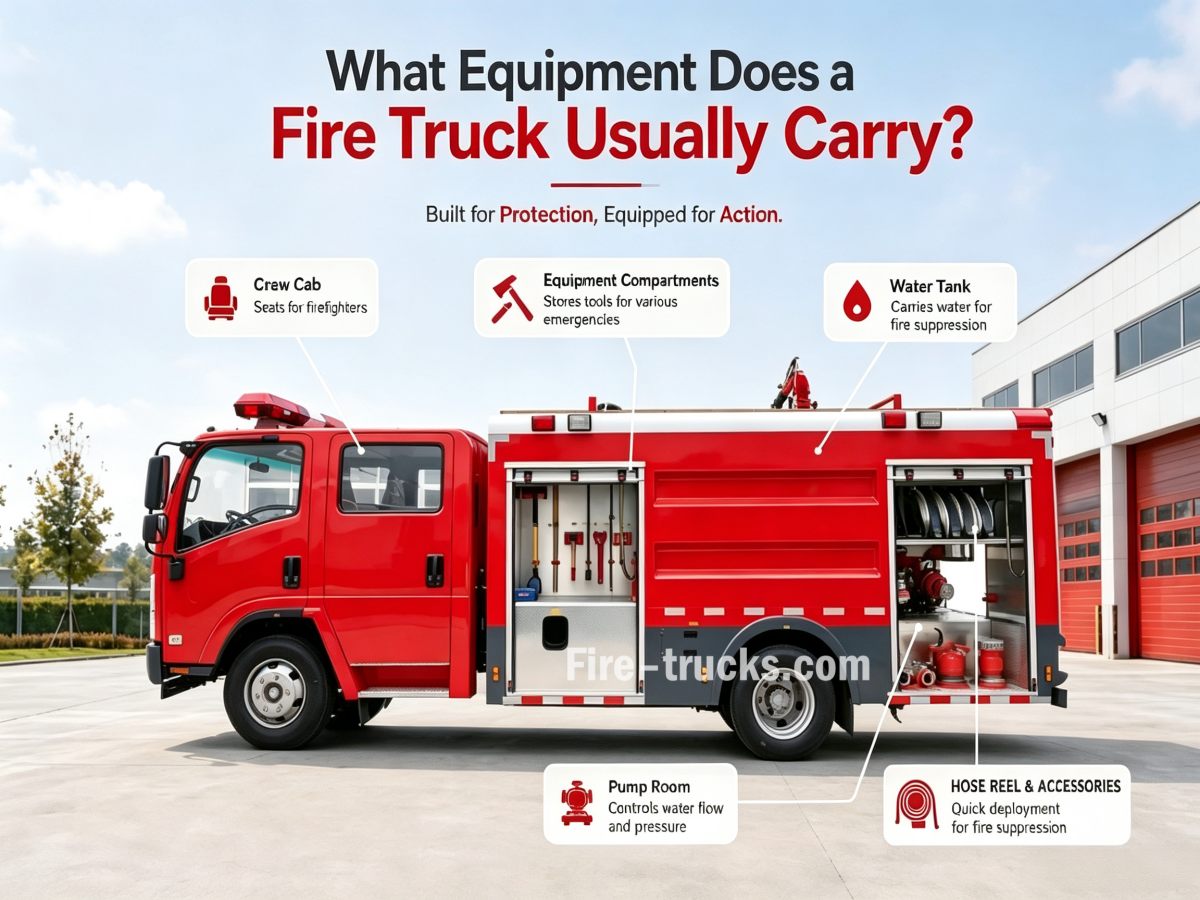
Өрт сөндіру көлігі әдетте өрт сөндіру, су беру, құтқару және қауіпсіздікті қорғау жабдықтарын тасымалдайды. Кең таралған жабдықтарға өрт сорғылары, су бактары, өрт жеңдері, өрт саптамалары, өрт оқпандары, клапандар, өрт баспалдақтары, құтқару құралдары, қорғаныс жабдықтары және байланыс құрылғылары жатады. Бұл мақала стандартты өрт сөндіру көлігі жабдықтарының жіктелуін, функцияларын және таңдау кезіндегі ескерілетін мәселелерін жүйелі түрде талдайды.өрт сөндіру көлігіжабдықтары, сатып алу мамандары мен соңғы пайдаланушыларға өрт сөндіру техникасы конфигурацияларын толық түсінуге көмектеседі. I. Өрт сөндіру көлігі жабдықтарының жіктелуі 1. Өрт сөндіру жабдықтары— Өртті тікелей сөндіруге арналған негізгі құралдар, соның ішінде өрт саптамалары, өрт оқпандары, өрт жеңдері, су бөлгіштер және адаптерлер. 2. Құтқару және бұзу жабдықтары— Құтқару және өрт сөндіру жұмыстарына кіру жолдарын жасауға арналған құралдар, соның ішінде гидравликалық құтқару құралдары, өрт балталары, ломдар, кескіш аралар және шынжырлы аралар. 3. Құтқару және өмір сақтайтын жабдықтар— Іздеу, тасымалдау және адамдарды қорғауға арналған жабдықтар, соның ішінде зембілдер, құтқару арқандары, қауіпсіздік ілмектері, түсу жылдамдығын реттейтін құрылғылар, автономды тыныс алу аппараттары (SCBA) және қосалқы ауа баллондары. 4. Түтінді шығару және жарықтандыру жабдықтары— Өрт орнындағы жағдайды жақсартуға арналған жабдықтар, соның ішінде түтін шығарғыштар, жылжымалы жарықтандыру мұнаралары және тасымалды жоғары қарқынды іздеу шамдары. 5. Жеке қорғаныс жабдықтары (PPE)— Өрт сөндірушілердің қауіпсіздігін қорғауға арналған құралдар, соның ішінде дулығалар, құрылымдық өрт сөндіруге арналған қорғаныс киімдері, қолғаптар, етіктер және қауіпсіздік белдіктері. 6. Байланыс және барлау жабдықтары— Өрт орнындағы ақпарат жинау және басқаруды үйлестіруге арналған жабдықтар, соның ішінде екіжақты радиостанциялар, жылулық бейнелеу камералары және улы газ детекторлары. II. Өрт сөндіру көліктеріндегі өрт сөндіру жабдықтары 1. Өрт сорғысы Өрт сорғысы барлық өрт сөндіру операцияларының қуат көзі болып табылады. Ол суды механикалық түрде қысымдайды және оған «суды сору → қысымдау → жеткізу → шығару» толық процесін орындауға жеткілікті кинетикалық энергия береді. Өрт сорғыларының типтік сипаттамалары: •Стандартты қысымды өрт сорғысы (CB10/30 түрі):Өнімділігі ≥30L/s, номиналды қысымы 1.0MPa, артқы бөлікте орнатылады. Стандартты су тасымалдаушы көліктерге және көбікпен өрт сөндіру көліктеріне жарамды, қалалық және өнеркәсіптік өрт сөндірудің көптеген су беру талаптарын қанағаттандырады. •Орташа/жоғары қысымды өрт сорғысы:Төмен қысымды ағын 1.0MPa кезінде 30L/s, жоғары қысымды ағын 2.0MPa кезінде 20L/s, артқы бөлікте орнатылады. Қос қысымды құрылым бір сорғыда үлкен көлемді беруді (төмен қысым) және алыс қашықтыққа/биік ғимараттарға жеткізуді (жоғары қысым) қамтамасыз етеді. Қалалық негізгі өрт сөндіру көліктері мен биік ғимараттардағы өрт сөндіру жағдайларына қолайлы. •Жоғары қысымды өрт сорғысы:Өнімділігі 10-1...
Мәлімет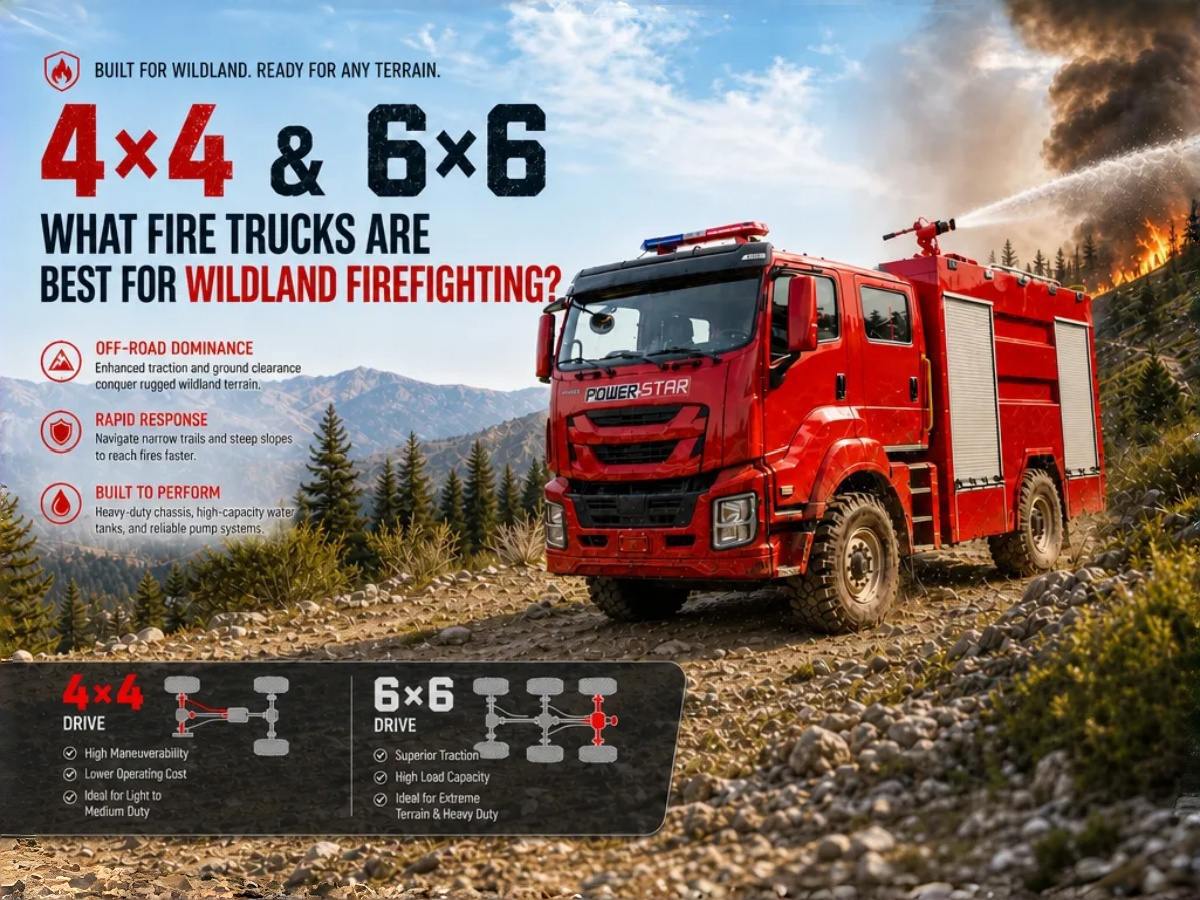
Табиғи аумақтардағы өрт сөндіру құрылыс нысандарындағы өрт сөндіруден түбегейлі ерекшеленетін қиындықтарды тудырады. Шалғай ормандарда, шабындықтарда және таулы жерлерде өрт сөндіру көліктері тар соқпақтармен жүруге, тік беткейлерге көтерілуге және өрт гидранттарынан немесе су көздерінен алыс жерде жұмыс істеуге тиіс. Дұрыс өрт сөндіру көлігін таңдау — әрекет ету уақытын, экипаж қауіпсіздігін және өртті сөндіру тиімділігін тікелей әсер ететін стратегиялық шешім. Бұл мақала табиғи аумақтардағы өрт сөндіруге ең қолайлы өрт сөндіру көлігі түрлерін, олардың негізгі ерекшеліктерін және таңдау әдістерін жан-жақты талдап, нақты пайдалану талаптарыңызға сай дұрыс шешім қабылдауға көмектеседі. Қысқаша жауап Табиғи аумақтардағы өрттер үлкен өрт аумақтарымен, күрделі жер бедерімен, шектеулі су көздерімен және нашар жол жағдайларымен сипатталады, сондықтан барлық орман өрті жағдайларын басқара алатын бір ғана өрт сөндіру көлігі жоқ. Жалпы алғанда, табиғи аумақтардағы өрт сөндіруде негізінен келесі өрт сөндіру көлігі түрлері қолданылады: • Жеңіл табиғи аумақтағы өрт сөндіру көліктері: орман жолдарына жету және жедел әрекет ету үшін• 4×4 жетекті жолсыз табиғи аумақтағы өрт сөндіру көліктері: таулы және қыратты жерлер үшін• 6×6 жетекті табиғи аумақтағы өрт сөндіру көліктері: ауқымды орман өрттері және ұзақ операциялар үшін• Су тасымалдағыштар: үздіксіз су жеткізу және қолдау үшін• Көбікті өрт сөндіру көліктері: мұнай нысандары, орман техникасы немесе арнайы өрттер үшін• Құтқару көліктері: байланыс, жарықтандыру, кедергілерді бұзу және логистикалық қолдау үшін I. Неліктен табиғи аумақтағы өрттерге арнайы өрт сөндіру көліктері қажет? Табиғи аумақтағы өрттер құрылыс нысандарындағы өрттерден бірнеше маңызды ерекшелігі бойынша түбегейлі өзгеше: Табиғи аумақтағы өрттердің негізгі сипаттамалары:• Жердің гектарларын қамтитын үлкен өрт аумақтары• Жел бағытының жылдам өзгеруі• Күрделі және ойлы-қырлы жер бедері• Өрт гидранттарына немесе су көздеріне қолжетімділіктің шектеулі болуы немесе мүлде болмауы• Тар, төселмеген орман жолдары• Байланыс жағдайларының күрделілігі Қалалық стандартты өрт сөндіру көліктері келесі себептерге байланысты табиғи аумақтағы өрт сөндіруге әдетте жарамсыз: • • Төселмеген тау жолдары мен тік беткейлерде жүру үшін 4×4 немесе толық жетекті жүйенің болмауы;• • Үлкен өлшемі және жерден төмен биіктігі тар орман соқпақтарында және жұмсақ жерлерде тұрып қалуға бейім етеді;• • Қалалық сорғылар орташа қысымда жоғары ағынға басымдық береді, ал табиғи аумақтағы операциялар шектеулі сумен ұзын жең желілерінде жоғары қысымды қажет етеді — бұл түбегейлі басқа тәсіл. II. Табиғи аумақтағы өрт сөндіру көліктерінің кең таралған түрлері Өрт сөндіру көлігі түрі Негізгі сипаттамалары Қолданылатын жағдайлар Жеңіл табиғи аумақтағы өрт сөндіру көлігі Жоғары маневрлік, ықшам өлшем Орманды патрульдеу, бастапқы шабуыл 4x4 табиғи аумақтағы өрт сөндіру көлігі Күшті жолсыз жүру мүмкіндігі Таулы және қыратты жерлер 6x6 табиғи аумақтағы өрт сөндіру көлігі Үлкен су сыйымдылығ...
Мәлімет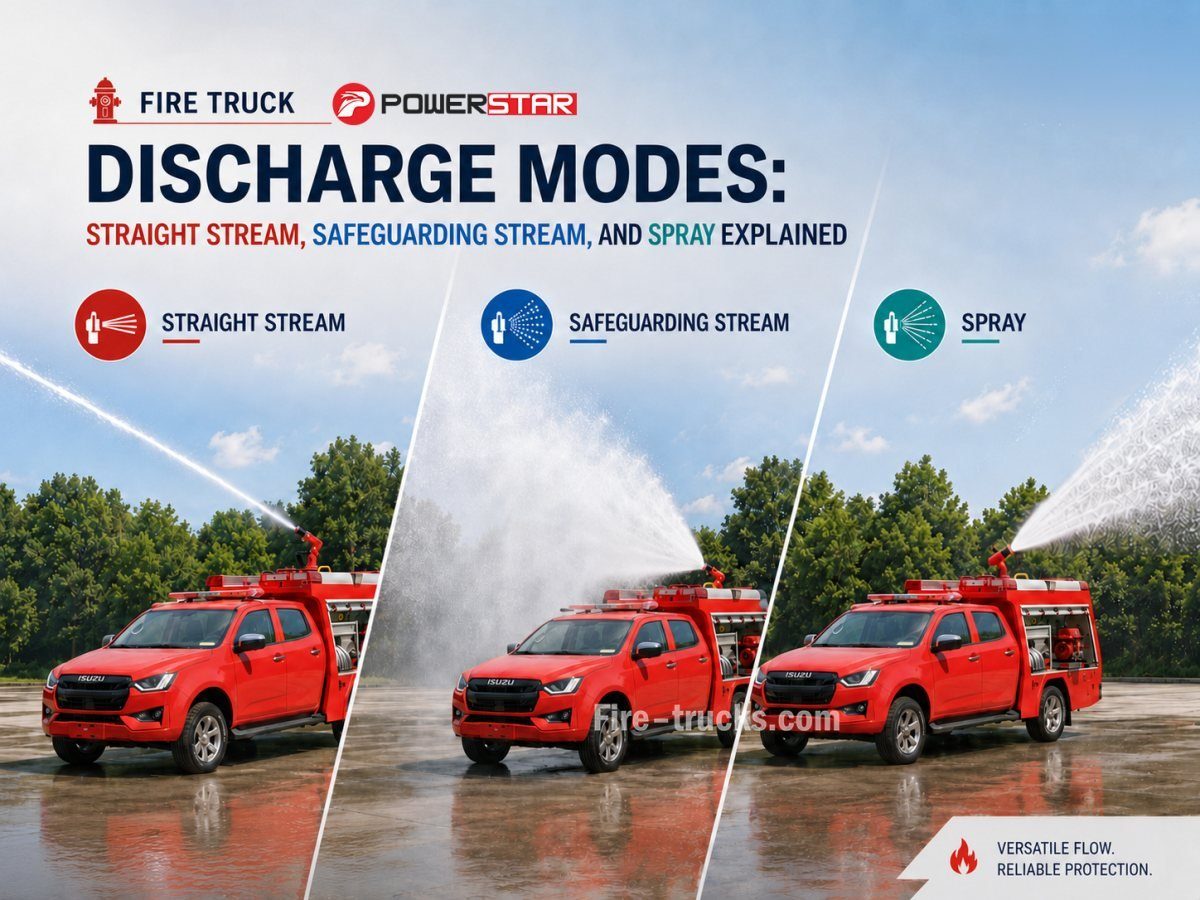
Өрт сөндіру операцияларында су беру режимін таңдау өрт сөндіру тиімділігін, операциялық қауіпсіздікті және өртті бақылау нәтижелілігін тікелей анықтайды. Көпшілік мынаны білмейді: өрт сөндіру көлігі саптамалары үш негізгі су беру режимі арасында ауыса алады: түзу ағын, бүріккіш ағын және қорғаныс ағыны. Әртүрлі режимдер ағын пішіні, қашықтығы, соққы күші және қамту аумағы бойынша айтарлықтай ерекшеленеді, әрі әрқайсысы мүлде басқа өрт жағдайларына сәйкес келеді. Бұл мақала кәсіби өрт сөндіру операциялары стандарттарына негізделіп, үш су беру режимінің принциптерін, негізгі сипаттамаларын және қолдану жағдайларын жан-жақты талдайды, бұл тұтынушыларымызға өрт сөндіру көлігімен су беру әдістерін жүйелі түрде меңгеруге көмектеседі. I. Неліктен өрт сөндіру көліктеріне әртүрлі су беру режимдері қажет? Түзу ағын, бүріккіш ағын және қорғаныс ағыны үш түрлі өрт сөндіру механизміне сәйкес келеді: соққымен сөндіру, булану арқылы тұншықтыру және жылулық сәулеленуден қорғау. Өрт сөндірушілер жағдайға қарай оларды икемді түрде ауыстыруы керек. Сонымен, неге біз тек бір ғана ағын түрін пайдалана алмаймыз? 1. Өрт түрлерінің әртүрлілігі әртүрлі сөндіргіш орта пішіндерін қажет етеді Әртүрлі өрт түрлерінің жану сипаттамалары әртүрлі, бұл тиісті сөндіру әдісін анықтайды: • A класты қатты материалдар өрттері жанған материалдарды бұзу және ішкі салқындату үшін ену мақсатында түзу ағынның соққысын қажет етеді; • B класты сұйық өрттерде түзу ағынды қолдануға болмайды (ол шашырауға және өрттің таралуына әкеледі), оның орнына жабу және сұйылту үшін қорғаныс немесе бүріккіш ағын қолданылуы керек; • E класты кернеудегі электр өрттерінде тек бүріккіш ағынды қолдануға болады, өйткені ұсақ су тамшылары үздіксіз өткізгіш жол түзбейді; • Жабық кеңістік өрттерінде бүкіл кеңістікті толтыру үшін бүріккіш ағын қажет, ол булану арқылы жылуды сіңіру және тұншықтыру жолымен өртті сөндіреді. Бірде-бір режим барлық өрт түрлеріне бейімделе алмайды. 2. Бір өрттің әртүрлі кезеңдері әртүрлі тактикалық тәсілдерді қажет етеді Тіпті бір өрттің өзінде әртүрлі кезеңдер әртүрлі су беру режимдерін қажет етеді: • Өрт қарқынды болған бастапқы кезеңде оны тез басу үшін өрт ошағына алыс қашықтықтан соққы беру мақсатында түзу ағын қажет; • Ілгері жылжу кезінде жылулық сәулеленуді бөгеу және персоналды қорғау үшін су пердесі тосқауылын қалыптастыратын қорғаныс ағыны қажет; • Бөлмеге кірер алдында ішкі шабуылға жағдай жасау үшін түтін мен газдарды салқындатып, сұйылту мақсатында бүріккіш ағын қажет. Бір ғана режим бүкіл өрт сөндіру процесіндегі операциялық қажеттіліктерді қамти алмайды. 3. Қашықтық, қамту аумағы және салқындату тиімділігі бір уақытта орындала алмайды Үш режимнің әрқайсысының үш негізгі өлшем бойынша өз артықшылықтары мен кемшіліктері бар: • Түзу ағынның қашықтығы ең ұзын (120 м+ дейін), бірақ қамту аумағы шағын, тек нүктелік әсер етеді; • Бүріккіш ағын кеңістікті толтырады және булану арқылы жылу сіңіру тиімділігі ең жоғары, бірақ қашықтығы ең қысқа; • Қорғаныс ағыны желпуіш тәрізді тарал...
Мәлімет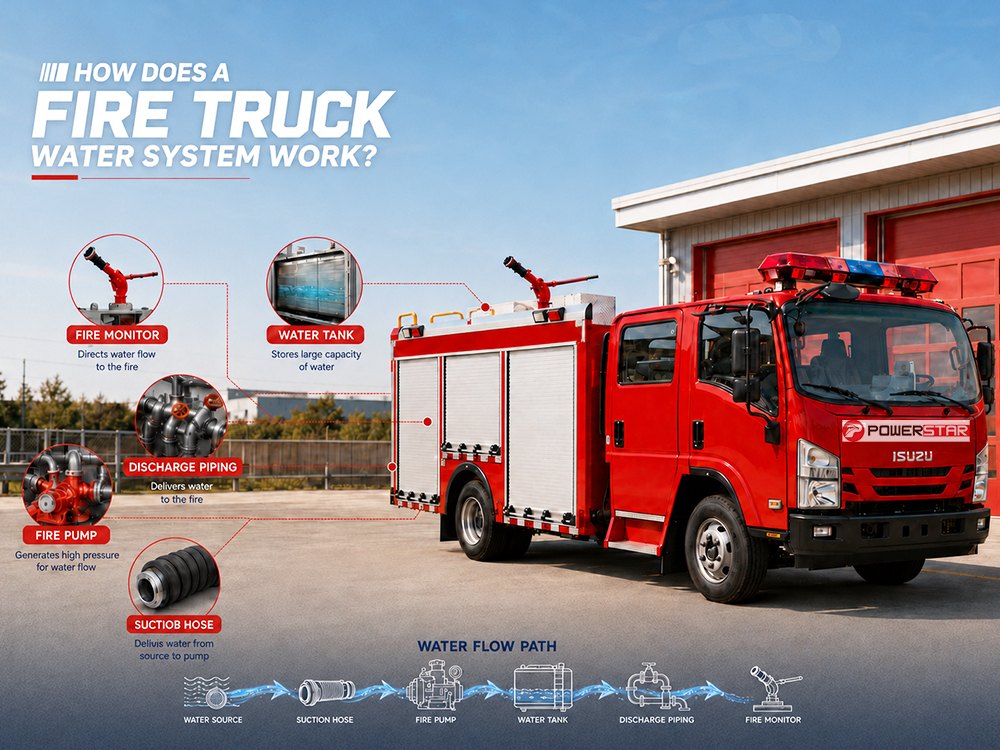
Өрт сөндіру автокөлігінің су құбыры жүйесі әрбір өрт сөндіру операциясының өзегі болып табылады. Ол резервуардан немесе сыртқы көзден суды сорғы, клапандар және құбырлар арқылы дәл бағыттап, өрт болған жерге жоғары қысымды су немесе көбік жеткізеді — бұл тығыз қала орталығындағы көпқабатты ғимарат өрті болсын немесе өнеркәсіптік аймақтағы мұнай-химия сақтау резервуарының өрті болсын. өрт сөндіру автокөлігі су құбыры жүйесі бірге жұмыс істейтін бірнеше құрамдас бөліктен тұрады: өрт сорғысы, су резервуары, сору түтігі, шығару құбырлары, клапандар, бөлгіш тармақ, жинақтаушы тармақ, сүзгі, өрт мониторы, түтік жалғастырғыштары және тағы басқалар. Толық ағын жолы: Су резервуары → Сору түтігі → Сүзгі → Өрт сорғысы → Қысымды реттеу жүйесі → Шығару коллекторы → Клапандар → Бөлгіш тармақ → Өрт мониторы / Түтік жалғастырғыштары → Саптама Бұл мақалада су құбыры жүйесінің әрбір құрамдас бөлігі және олардың суды қажетті қысым мен ағын мөлшерімен жеткізу үшін қалай бірге жұмыс істейтіні түсіндіріледі. I. Су құбыры жүйесінің негізгі құрамдас бөліктері Су резервуары Автокөліктегі су қорын сақтайды. ● Сыйымдылығы: Әдетте 2 000–12 000 литр. ● Жеткізуі: Қабылдау құбырлары арқылы сорғыға су береді. ● Ерекшеліктері: Көліктің тұрақтылығын қамтамасыз ететін толқынға қарсы қалқалар, қоқысты сүзуге арналған сүзгі және табиғи су көздерінен су тартуға арналған толтыру жүйесі. Өрт сорғысы PTO арқылы автокөлік қозғалтқышымен жетектелетін орталықтан тепкіш сорғы; бір сатылы/көп сатылы, шойыннан немесе қоладан жасалған. ● Қысым деңгейлері: Стандартты 0,8 МПа, 1,0 МПа, 1,2 МПа және 1,4 МПа көрсеткіштерінде қолжетімді, бұл өрт сөндірудің әдеттегі талаптарына сәйкес келеді. ● Ағын жылдамдығы: 1 200-ден 6 000 л/мин-ге дейін өзгереді, өнімділік сипаттамалары жоғары қысымды және үлкен көлемді операциялар үшін оңтайландырылған. Клапандар мен құбырлар Су ағынының бағыты мен көлемін басқаратын құбырлар мен клапандар желісі. ● Қабылдау клапаны: Сорғыны сыртқы су көздеріне (өрт гидранты немесе су тарту нүктесі) қосады ● Резервуардан сорғыға арналған клапан: Сорғыға суды тікелей борттағы резервуардан алуға мүмкіндік береді ● Шығару клапандары: Түтіктер мен саптамаларға бағытталатын су ағынын басқарады II. Өрт сөндіру автокөлігінің су құбыры жүйесінің жұмыс істеу принципі 1-қадам: Су алу және толтыру Су жүйеге борттағы резервуардан, өрт гидрантынан немесе табиғи су көздерінен (көлдер, өзендер, тоғандар) түседі. Табиғи су көздерінен су тарту кезінде толтыру жүйесі (вакуумдық сорғы) сору түтігіндегі ауаны шығарып, вакуум жасайды, бұл атмосфералық қысымның суды сорғыға итеруіне мүмкіндік береді. Сүзгі қоқысты ұстап, сорғыны қорғайды, ал кері клапан кері ағуды болдырмайды. 2-қадам: Сорғыны қысымдау Ортадан тепкіш сорғы жүк көлігінің қозғалтқышы арқылы қуат алу механизмі (PTO) көмегімен іске қосылады. Сорғыға су толғаннан кейін жұмыс дөңгелегі жоғары жылдамдықпен (1 500–2 500 айн/мин) айналады. Ортадан тепкіш күш суды сыртқа қарай лақтырып, оның жылдамдығын арттырады. Сорғы корпусы осы жылдамды...
Мәлімет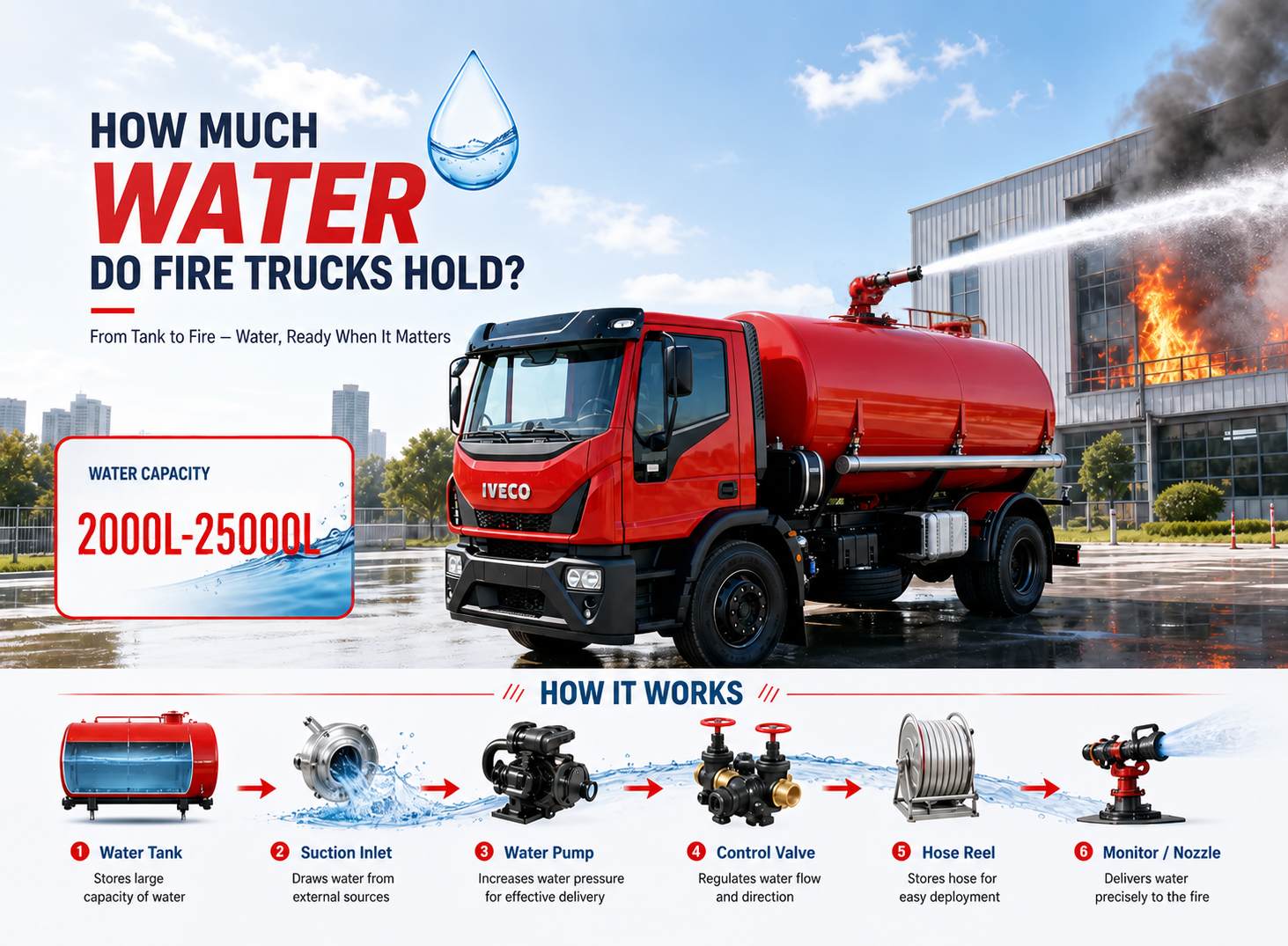
Өрт сөндіру көлігі қанша су тасымалдай алады? Бұл біздің тұтынушыларымыз өрт сөндіру көлігін таңдағанда кездесетін алғашқы сұрақтардың бірі. Бір ғана белгіленген сан жоқ — ол көлік түріне, шасси сыйымдылығына, жобалау мақсатына және өңірлік талаптарға байланысты, сыйымдылығы 2 000 литр болатын жеңіл үлгілерден 25 000 литрлік өнеркәсіптік өрт сөндіру көліктеріне дейін өзгереді. Бірақ үлкенірек бак әрқашан жақсы өнімділікті білдірмейді;өрт сөндіру көлігі су багының сыйымдылығы тиімді өрт сөндіру нәтижелерін қамтамасыз ету үшін сорғының ағын жылдамдығымен, лафеттік оқпанның шығару жылдамдығымен және шасси сыйымдылығымен дұрыс сәйкестендірілуі керек. Бұл мақала өрт сөндіру көлігінің су багы сыйымдылығының негізгі қағидаларынан басталып, әртүрлі көлік түрлеріне арналған әдеттегі сақтау көлемдерін талдайды, бак конструкциясына әсер ететін негізгі факторларды қарастырады және сатып алуға қатысты практикалық нұсқаулық береді. Негізгі тұжырымдар: Өрт сөндіру көлігінің су багы сыйымдылығы әдетте 2 000-нан 25 000 литрге дейін болады Әртүрлі өрт сөндіру көліктерінің бак сыйымдылығы әртүрлі болады Үлкенірек бак өрт сөндіру мүмкіндігі жақсырақ дегенді білдірмейді Бак сыйымдылығы сорғы ағынымен, лафеттік оқпан ағынымен және шасси сыйымдылығымен сәйкестендірілуі керек Өнеркәсіптік өрт сөндіру әдетте үлкен бактарды қажет етеді, ал муниципалдық өрт сөндіру маневрлік қабілетке басымдық береді » I. Өрт сөндіру көлігінің су бактарының үш негізгі түрі Сорғысы бар өрт сөндіру көліктері:Бұлар ең көп таралған муниципалдық өрт сөндіру көліктері. Олар су көзі ретінде негізінен өрт гидранттарына сүйенеді және бастапқы шабуыл үшін бортында шамамен 1 900–3 800 литр су алып жүреді. Бұл көліктердің негізгі бөлігі — бак емес, сорғы; олар гидрантқа қосылғаннан кейін қысыммен су беруге арналған. Цистерна көліктері (су тасымалдаушылар):Бұл көліктер үлкен көлемдегі суды тасымалдауға арналған, олардың бак сыйымдылығы әдетте 11 400 литрден асады. Олар өрт гидранттары жоқ ауылдық және шалғай аймақтарда маңызды рөл атқарады: суды су көздерінен өрт орнына тасымалдап, сорғысы бар көліктердің пайдалануына береді. Сорғысы және цистернасы бар көліктер:Бұл көліктер бір құрылғыда сорғылау және су тасымалдау функцияларын біріктіреді. Олар өрт сөндіру үшін суды шығарып қана қоймай, басқа көліктерді де сумен қамтамасыз ете алады. Бак сыйымдылығы әдетте 5 700-ден 11 400 литрге дейін болады, бұл оларды өрт сөндіру бөлімдері үшін әмбебап шешім етеді. » II. Әртүрлі өрт сөндіру көліктері қанша су тасымалдай алады? Өрт сөндіру көлігінің түрі Бактың әдеттегі сыйымдылығы Негізгі қолданылуы Жеңіл өрт сөндіру көлігі 2 000–3 000 л Қаладағы жедел әрекет ету, бастапқы шабуыл Муниципалдық сорғы көлігі 3 000–6 000 л Муниципалдық өрт сөндіру, құрылыс өрттері Орташа санаттағы сорғы көлігі 6 000–10 000 л Қалалық және өнеркәсіптік міндеттердің үйлесімі Ауыр санаттағы сорғы көлігі 10 000–15 000 л Ұзақ операциялар, алыс қашықтықтағы әрекет ету Өнеркәсіптік өрт сөндіру көлігі 15 000–25 000 л Мұнай, химия, тау-кен өнді...
Мәлімет
Оқыңыз, хабардар болыңыз, жазылыңыз және сіздің пікіріңізді білгіміз келеді.

 IPv6 желісі қолдау көрсетіледі

 қазақ
 English
 français
 Deutsch
 русский
 italiano
 español
 português
 Nederlands
 العربية
 日本語
 한국의
 Türkçe
 Melayu
 ไทย
 Tiếng Việt
 Indonesia
 中文
 Filipino
 မြန်မာ
 српски